Chicken Road isn't the scam — everything around it is
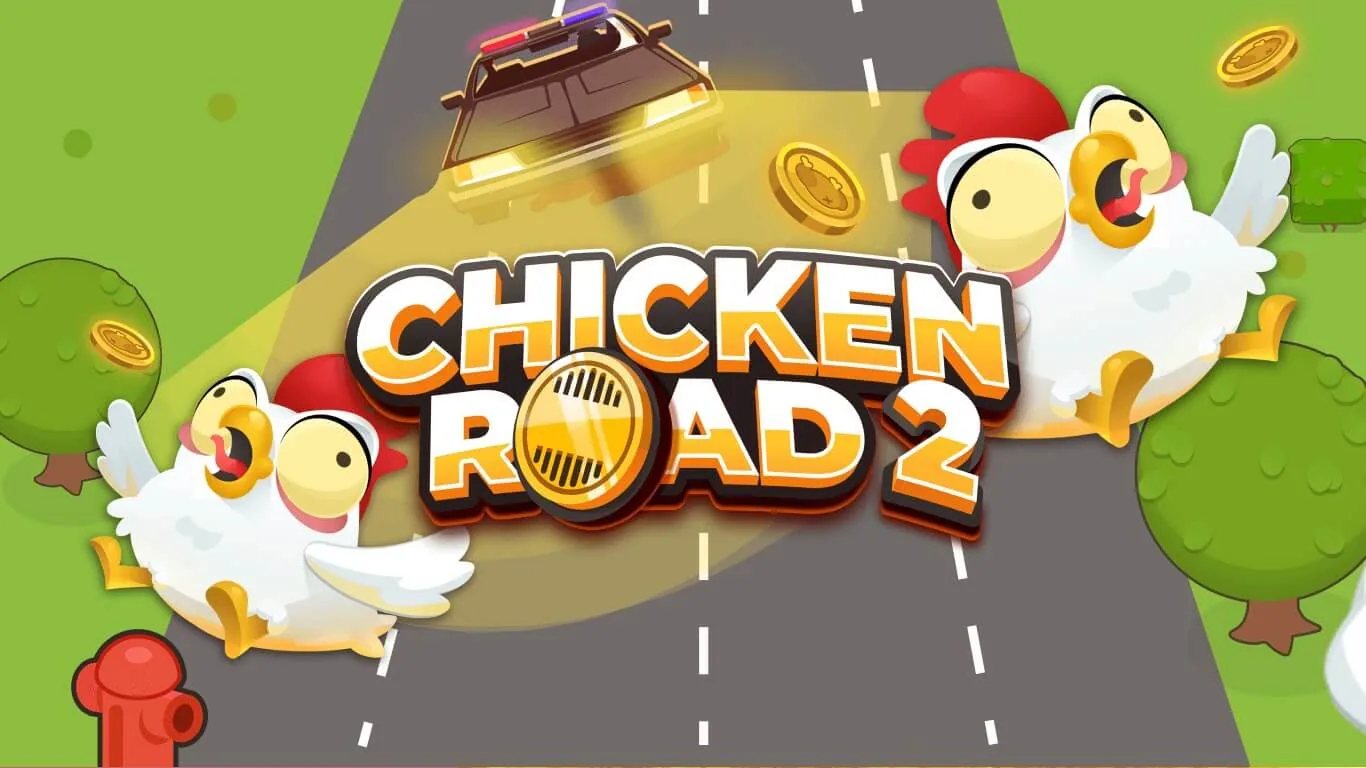
Here's the verdict first: Chicken Road is a legitimate crash game built by InOut Games, a licensed B2B studio. You can play it legally at UKGC-regulated casinos. The mathematics are standard, the RTP figure is audited, and the provably-fair system lets you verify every round.
The scam isn't the game. It's the coordinated swarm of fake apps, deepfake celebrity ads, fabricated £20,000 payout videos, and unlicensed offshore clones that hijack the name. If you've seen a TikTok showing someone cashing out five figures in three minutes, or downloaded an APK promising instant withdrawals, you've encountered the fraud ecosystem — not the actual title. This page walks through what's genuine, what's manufactured, and where your money disappears if you land on the wrong side of that line.
The legitimate game: what InOut actually shipped
Chicken Road launched in April 2024 from InOut Games, a Malta-licensed provider that specialises in instant crash titles. The format is brutally simple: a cartoon chicken hops lane by lane across a road filled with moving traffic. Each successful lane increases your multiplier. Hit a car, lose the stake. You can cash out at any point before the collision.
The harder the mode, the fewer lanes you cross and the higher the car density. Hardcore squeezes 18 lanes into the same risk budget as Easy's 30, so the odds of hitting a car climb sharply. The multiplier curve adjusts to match: safe lanes pay less per step in Easy mode, more in Hardcore.
InOut holds B2B licences from Malta and Curaçao. That means the studio supplies the game to casino operators; it doesn't run player-facing sites itself. If you're playing in the UK, you reach Chicken Road through a UKGC-licensed operator — the casino, not the game provider, holds your funds and processes your withdrawals.
The scam layer: what's built on top
Chicken Road became one of the most-searched gambling titles globally within six months of release, and that search volume opened the door to a coordinated fraud operation. Security researchers documented the pattern in early 2026: fake Android apps uploaded to Google Play using Early Access loopholes to bypass review queues, disposable domains hosting replica App Store pages, and at least 1,500 phishing sites funnelling players toward unlicensed casinos.
- Deepfake advertisements — AI-generated videos of athletes and actors claiming they made £18,000 in an afternoon playing Chicken Road, with fabricated Trustpilot scores overlaid on the screen.
- Fake apps — standalone APKs and iOS packages named «Chicken Road Casino» or «Chicken Road Official», often bundled with affiliate tracking or credential harvesters. The legitimate game has no standalone app; it runs in a browser.
- Manufactured payout clips — screen recordings showing six-figure balances and instant PayPal transfers, edited to look like in-game footage. Real UKGC withdrawals take 24–48 hours for verification on the first transaction.
- Clone sites — unregulated offshore casinos that copy the Chicken Road interface but omit provably-fair hashing, manipulate RTP, or refuse to process withdrawals above a threshold.
- Influencer schemes — TikTok and Instagram creators paid to post referral links with fabricated win rates, steering followers toward unlicensed platforms that pay commission on deposits but throttle payouts.
The tell is always the promise: guaranteed profit, one-click download, or celebrity endorsement. InOut's legitimate game offers none of those. It's a crash title with a house edge, distributed through regulated operators that require KYC and impose affordability checks from £150 net monthly deposits.
How to verify you're playing the real version in sixty seconds
- Check the footer for a UKGC licence number — it should be a long alphanumeric string in the format 000-XXXXXX-R-XXXXXX-XXX. Look it up in the UK Gambling Commission's public register to confirm the operator name matches the site branding.
- Confirm the game loads inside the casino's domain, not a standalone app or external frame. Chicken Road is browser-based; if you downloaded an APK or installed an iOS package, you're not playing the InOut original.
- Look for GAMSTOP integration — legitimate UKGC operators display the self-exclusion link prominently, usually in the footer alongside BeGambleAware and GamCare logos.
- Test the payment methods — UK-licensed sites accept debit cards, PayPal, Apple Pay, and Open Banking. They will not accept credit cards (banned for gambling since 2020) or ask for cryptocurrency.
- Check the RTP disclosure and provably-fair hash. The real game publishes a 98% RTP and lets you verify round outcomes via seed inspection. If the site omits both, it's not the licensed build.
What playing legally in the UK actually involves
Chicken Road is available at UKGC-licensed casinos as part of their instant-game or crash-game catalogue. Examples include operators like LuckyWave, Spindog, and Wino Casino — these are market examples, not endorsements, and you should verify each operator's current licence status in the UKGC register before depositing.
Because Chicken Road is classed as a slot-style game under UKGC rules, stake caps apply: £5.00 per spin for players 25 and older, £2.00 per spin for those aged 18–24. The cap is enforced at the game level — you won't be able to place a £10.00 bet even if your balance allows it.
- Account setup — age and identity verification before your first deposit, using electoral roll data or a utility bill. This typically clears in minutes but can take up to 24 hours.
- Affordability checks — UKGC operators monitor net deposits. If you deposit £150 or more in a calendar month, the site will request payslips, bank statements, or other income evidence at the first threshold. This is a regulatory requirement, not a choice.
- Payment methods — debit cards, PayPal, Apple Pay, Open Banking (Trustly), or paysafecard. Credit cards are prohibited. The payment method must be registered in your own name; third-party or joint-account deposits are rejected.
- Withdrawals — e-wallets process in a few hours to 24 hours. Faster Payments to a UK bank account take same day to two working days. Your first withdrawal triggers document checks (passport or licence, proof of address, sometimes proof of funds), which add 24–48 hours. Subsequent withdrawals are faster once you're verified.
- Tax — gambling winnings are tax-free for UK players. The operator pays Remote Gaming Duty (40% as of April 2026), which is already deducted from the RTP you see.
Demo play exists for Chicken Road, but UKGC sites often gate it behind age verification — you'll need to log in to a verified account even to try the free version. This is common across instant and crash games in the UK catalogue.
The maths: why 98% RTP doesn't mean profit
InOut publishes a 98% return-to-player figure for Chicken Road, audited by iTech Labs. That sounds generous — most UK slots sit between 94% and 96% — but it's still a 2% house edge, and it compounds quickly over repeated rounds.
Here's what 98% RTP means in practice: for every £100.00 wagered across thousands of rounds, the game returns £98.00 to players as winnings and keeps £2.00. That £2.00 edge applies to every bet. If you start with £50.00 and play fifty £1.00 rounds, you'd expect to finish with roughly £49.00 — assuming average luck and no volatility swings.
Volatility is where the damage occurs. Chicken Road is a high-volatility crash game: long losing streaks punctuated by rare multiplier wins. The RTP averages out over tens of thousands of rounds, but in a single session of twenty or thirty bets, you can easily lose twelve in a row before hitting one 5× payout. That streak drains your balance faster than the 2% edge suggests.
The difficulty modes don't change the RTP — they redistribute risk. Hardcore mode pays bigger multipliers per lane because the car density is higher, but the overall return stays at 98%. You're not improving your odds by choosing Hard over Easy; you're shifting the payout curve toward fewer, larger wins and more frequent wipes.
Where your bankroll actually goes
Let's track £100.00 deposited at a UKGC casino to play Chicken Road, assuming you're 25 or older and betting the maximum £5.00 per round.
| Stage | Amount | What happens |
|---|---|---|
| Deposit | £100.00 | Full amount credited; no fees on debit card or PayPal deposits at most UKGC sites. |
| Welcome bonus | Variable | If you claim a 100% match, you get £100.00 bonus funds — but they carry a 35× to 50× wagering requirement. You'd need to bet £3,500.00–£5,000.00 before converting bonus to cash. |
| Session 1 (20 rounds at £5.00) | £100.00 wagered | Expected return: £98.00. Actual result depends on volatility — you might finish with £110.00 after one big win, or £60.00 after a losing streak. |
| Session 2 (continuing from £98.00) | 98.00 wagered over 20 rounds | Expected return: £96.04. House edge compounds: you've now lost £3.96 from the original £100.00 across 40 rounds. |
| Withdrawal attempt | Remaining balance | First withdrawal triggers KYC document check, adding 24–48 hours. If you claimed a bonus, most of the balance is still locked until wagering completes. |
The house edge is only part of the cost. Bonus wagering requirements extend your exposure: every £5.00 bet toward a 40× requirement is another spin against a 2% edge. If you deposit £50.00 and claim a £50.00 bonus with 40× playthrough, you're committing to £2,000.00 in bets before withdrawal — losing an expected £40.00 to the house edge in the process, even if you cash out the moment wagering clears.
Volatility accelerates the drain. A streak of eight losing £5.00 bets costs you £40.00 in six minutes. One 10× win on the ninth bet recovers £50.00, putting you £10.00 up — but the next streak might hit before you cash out, and the cycle repeats until the balance zeroes. The RTP guarantees nothing about the path your session takes; it's an average, not a floor.
Playing within limits: tools that actually exist
UK regulation provides three hard stops: GAMSTOP, mandatory deposit limits, and stake caps. These are enforceable tools, not suggestions.
- GAMSTOP — a single registration blocks every UKGC-licensed casino for six months, one year, or five years. It's free, immediate, and irreversible during the exclusion period. Register at gamstop.co.uk; once active, you will not be able to create or access an account at any UK-licensed operator.
- Deposit limits — every UKGC site must offer daily, weekly, and monthly deposit caps. Set them during account creation or in settings. Once imposed, increasing a limit requires a 24-hour cooling-off period; decreasing is instant.
- Stake caps — £5.00 per spin for players 25 and older, £2.00 for those aged 18–24. Applied automatically by the casino software; Chicken Road will not accept a higher bet even if you attempt to override it.
- Affordability checks — from £150 net deposits per month, UKGC operators use credit-reference data to assess income. At higher thresholds (typically £500–£1,000 net monthly deposits), they request payslips or bank statements. Fail to provide evidence, and deposit functionality is restricted.
BeGambleAware (begambleaware.org) and GamCare (gamcare.org.uk) provide confidential support, live chat, and counselling referrals. Both are independent of the casinos. The National Gambling Helpline is 0808 8020 133, free and available 24 hours.
Final take: the game is fine, the ecosystem is toxic
Chicken Road works the way InOut designed it: a crash game with transparent mathematics, audited RTP, and provably-fair verification. The title isn't rigged, the provider is licensed, and UK players can access it legally through UKGC-regulated operators. If you understand the 2% house edge, accept the volatility, and verify the casino's licence before depositing, the game itself presents no scam risk.
The scam ecosystem — fake apps, deepfake ads, clone sites, fabricated payout videos — exists because the game became a search-volume magnet faster than enforcement could catch up. That fraud layer targets players who bypass the verification step, skip the UKGC register check, or chase the influencer links promising instant profit. The fake isn't subtle if you look: unlicensed sites omit GAMSTOP, accept crypto, and show no regulator logo. Real operators put the licence number in the footer and require document checks before your first withdrawal.
The house edge and volatility apply whether you're playing the legitimate version or a clone, but only the licensed build gives you recourse if something breaks — dispute resolution through the UKGC, payment method chargebacks, and audited fairness. The offshore clones offer none of that. They take deposits, throttle withdrawals, and vanish when challenged.
If you're going to play Chicken Road, verify the operator first. Look up the licence, confirm GAMSTOP integration, and check that payment methods exclude credit cards. Treat the RTP as a cost, not a promise, and set deposit limits before the first spin. The game can't scam you — but the hype around it absolutely will if you let it.
FAQ
Is Chicken Road legal to play in the UK?
Yes, when accessed through a UKGC-licensed casino. Chicken Road is a legitimate crash game from InOut Games, a Malta-licensed provider. UK operators carry it in their instant-game catalogue and apply the same regulatory safeguards as any other slot or casino title: stake caps (£5.00 or £2.00 per spin depending on age), deposit limits, affordability checks, and GAMSTOP integration. The game itself is legal; unlicensed offshore clones using the Chicken Road name are not. Always verify the operator's UKGC licence number in the public register before depositing.
How do I tell if I'm playing the real Chicken Road or a fake version?
Check five things in under a minute: the operator's UKGC licence number in the footer (look it up in the register), GAMSTOP and BeGambleAware links on the site, payment methods that exclude credit cards and cryptocurrency, a stated 98% RTP with provably-fair hash verification in the game interface, and browser-based play — no standalone app or APK download. If the site asks for a deposit before showing a licence, omits GAMSTOP, or offers instant crypto withdrawals, it's not the legitimate InOut build. The real game runs inside a regulated casino's domain, never as a separate app.
Can I actually win money playing Chicken Road, or is the RTP a trick?
You can win individual rounds and cash out ahead in a session, but the 98% RTP means the house keeps 2% of all wagers over time. That edge compounds: £100.00 bet across many rounds returns an average of £98.00, and volatility makes short-term results swing wider than the RTP suggests. Long losing streaks are structurally normal in high-volatility crash games. Winning is possible in any single session, but sustained profit over dozens or hundreds of rounds is statistically improbable. The RTP isn't a trick — it's an average that includes everyone's results, and the majority lose more than they win. Provably fair means the outcome is verifiable, not beatable.
Why are there so many fake Chicken Road apps and ads if the game is legitimate?
The game became a high-volume search term within six months of release, which made it a lucrative target for affiliate fraud. Scammers upload fake apps to Google Play (exploiting Early Access review gaps), create deepfake celebrity ads, and spin up replica casino sites — all designed to funnel players toward unlicensed offshore platforms that pay referral commissions on deposits but throttle or refuse withdrawals. The fraud layer isn't connected to InOut or the legitimate game; it's an opportunistic ecosystem built on top of the search traffic. Security researchers documented at least 1,500 disposable domains running the operation by early 2026. The tell is always the promise: guaranteed wins, instant payouts, or celebrity endorsement. The real game makes none of those claims and is only accessible through UKGC-licensed operators.